How to Choose the Right Suction Unit for Your Needs in 2025
In 2025, the selection of the right Suction Unit is more critical than ever, as advancements in healthcare technology continue to reshape the medical landscape. According to the Global Medical Equipment Market Report, the suction devices sector is projected to grow by 7.5% annually, reflecting an increasing demand for efficient and reliable suction solutions across various medical applications. With the mounting need for these devices, healthcare professionals must navigate a myriad of options to find a Suction Unit that fits their specific requirements.
Dr. Emily Tran, a leading expert in respiratory care technology, emphasizes the importance of making informed choices in this evolving market. She states, "Selecting the appropriate Suction Unit not only enhances patient safety but also optimizes clinical workflows." In light of this, practitioners are urged to consider factors such as device portability, suction power capabilities, and ease of maintenance. As the industry continues to innovate, understanding these parameters will be essential for healthcare facilities aiming to provide top-tier patient care while staying within budgetary constraints.

Factors to Consider When Selecting a Suction Unit for Medical Use
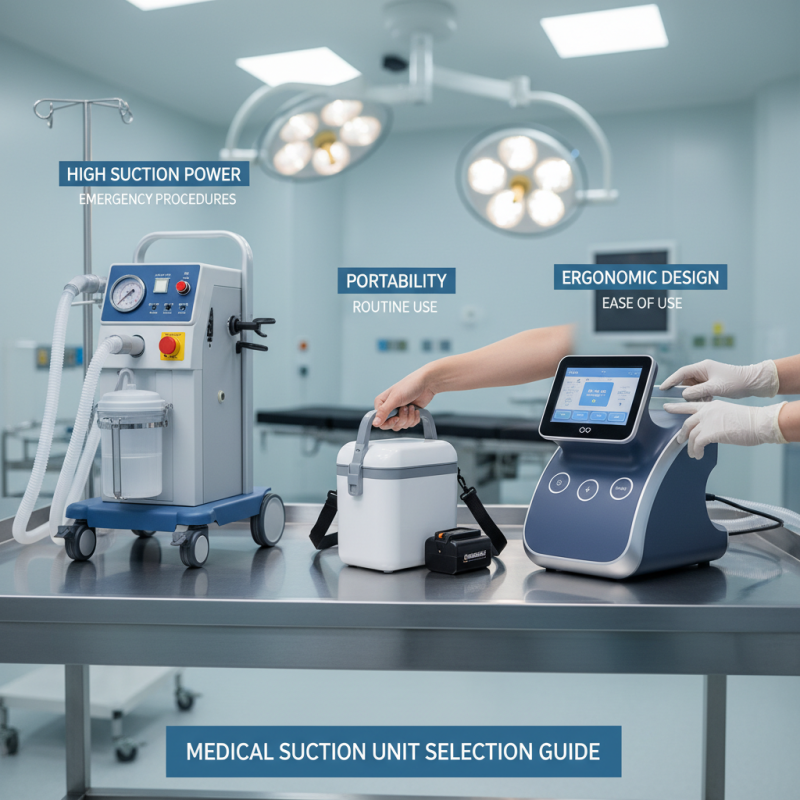
When selecting a suction unit for medical use, there are several critical factors to consider to ensure it meets your specific needs. Firstly, assess the suction power required for different medical procedures. Some settings may demand higher suction capabilities for emergencies, while routine procedures might require less. Additionally, consider the size and weight of the unit, particularly if it needs to be portable. Ergonomic design can also enhance usability, making it easier for medical staff to operate efficiently.
Tips: Always check the noise level of the suction unit, as a quieter model can improve the comfort of both patients and staff in sensitive environments. Second, review the ease of maintenance and availability of replacement parts, as this will impact the long-term reliability and efficiency of the unit.
Furthermore, you should account for the type of fluid you will be suctioning. Some units are designed for thicker fluids, while others are optimized for airborne particles or liquids. This means understanding the specific parameters of your medical environment can greatly influence your choice. Evaluate potential features like filtration systems, which can be critical for infection control and patient safety.
Understanding Different Types of Suction Units Available in 2025
When selecting the right suction unit in 2025, it's essential to understand the different types available on the market to meet your specific needs. The primary categories include portable suction units, stationary suction units, and surgical suction devices. Portable units are designed for flexibility and can be used in various settings, making them ideal for emergency situations or home care. These devices are often battery-operated, ensuring their functionality is not compromised by the lack of accessible power sources.
Stationary suction units, on the other hand, are typically installed in healthcare facilities and are meant for continuous use. They offer robust performance and are usually connected directly to a building's power supply, providing reliable suction capabilities for high-demand environments. Finally, surgical suction devices are specialized for use in operating rooms. They feature advanced filtration systems and precise suction control to ensure sterile conditions during invasive procedures. Each type of suction unit serves a distinct purpose, and understanding their differences is crucial in making an informed choice that aligns with your operational requirements.
How to Choose the Right Suction Unit for Your Needs in 2025 - Understanding Different Types of Suction Units Available in 2025
| Suction Unit Type |
Power Source |
Vacuum Level (mmHg) |
Portability |
Ideal Use Cases |
| Portable Electric Suction Unit |
Electric |
500 |
High |
Home care, emergency services |
| Wall-Mounted Suction Unit |
Electric |
600 |
Low |
Hospitals, clinics |
| Battery-Powered Suction Unit |
Battery |
450 |
High |
Mobile care, outdoor use |
| Central Suction System |
Electric |
750 |
Varies |
Large facilities, surgical centers |
| Manual Suction Device |
Manual |
300 |
Very High |
Travel, emergency kits |
Assessing Your Environment: Portable vs. Stationary Suction Units
When considering suction units for your needs, one of the primary decisions revolves around whether to choose a portable or stationary unit.
Portable suction units are ideal for environments where flexibility and mobility are paramount. For instance, in emergency medical situations or during home healthcare, having a lightweight and easily transportable unit can make a significant difference.
These devices can be moved between different locations and even between rooms, allowing caregivers to respond swiftly to patients' needs without being confined to a single area.
On the other hand, stationary suction units are designed for fixed locations, often offering higher power and larger capacity for continuous use.
These units are commonly found in healthcare settings such as operating rooms, dental clinics, and hospitals where suction demands fluctuate throughout the day.
A stationary unit is typically more robust, providing reliable suction capabilities for procedures that require sustained performance.
Assessing the nature of your environment—whether it's a dynamic setting that demands frequent movement or a more stable atmosphere that requires consistent service—will help determine the best option for your suction needs.
Budgeting for Your Suction Unit: Costs and Value Considerations
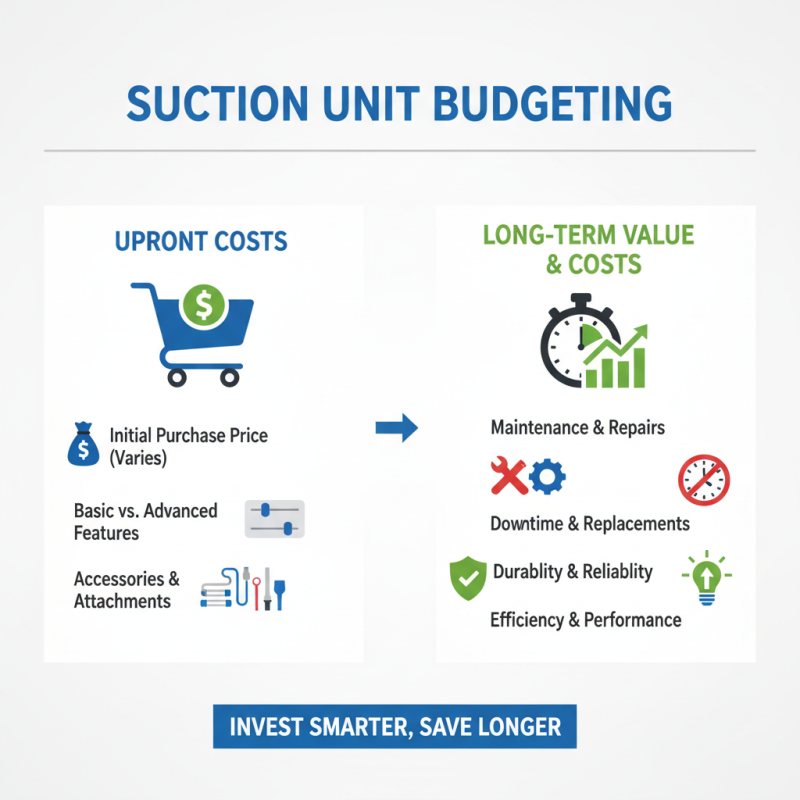
When budgeting for a suction unit, it's crucial to understand both the upfront costs and the long-term value it brings to your operations. Initial expenses can vary significantly based on the features and specifications necessary for your specific needs. A basic suction unit may come with a lower price tag, but it’s essential to consider the potential additional costs associated with maintenance and repairs over time. Investing in a higher-end model might seem daunting at first, but it could ultimately save you from frequent downtime and repair costs.
In addition to the purchase price, consider the operational costs, such as electricity consumption and supply materials related to the unit's use. Evaluating these ongoing costs can help you better understand the total cost of ownership. Moreover, consider the return on investment (ROI): a well-functioning suction unit can enhance productivity and efficiency, leading to increased output and reduced labor costs. In this way, determining the right balance between budget constraints and the value provided by the suction unit is essential to making an informed decision that suits your organization's needs for 2025 and beyond.
Compliance and Safety Standards for Suction Units in Healthcare Settings
In healthcare settings, adherence to compliance and safety standards when selecting suction units is paramount. According to the World Health Organization, improper use of suction devices can lead to significant patient complications, such as airway obstruction or infection. The latest guidelines urge facilities to prioritize suction units that meet ISO 10079 standards, which outline requirements for the safety and performance of suction equipment in medical environments. In 2025, healthcare providers must ensure their chosen devices comply with these evolving standards to promote patient safety and enhance operational efficiency.
Moreover, the Occupational Safety and Health Administration (OSHA) emphasizes the importance of selecting suction units that are not only efficient but also designed with features that minimize risk, such as auto shut-off mechanisms and easy-to-disinfect surfaces. A report by the Medical Device Innovation Consortium highlights that compliant suction units can reduce infection rates by up to 30%, significantly lowering healthcare-associated infections (HAIs). Therefore, when evaluating suction units, healthcare facilities must consider not just the technical specifications but also how these devices align with existing compliance frameworks and safety guidelines to protect both patients and staff.
Usage and Compliance of Suction Units in Healthcare Settings (2025)
The chart above displays the compliance rates of suction units across various healthcare settings in 2025. It highlights the importance of adhering to safety standards while ensuring optimal usage in emergencies, surgeries, respiratory care, home care, and dental clinics.