Top 10 Medical Portable Suction Machines for Global Buyers?
In the evolving landscape of medical equipment, the **Medical Portable Suction Machine** stands out as a vital tool. Its importance can be seen in various healthcare settings, from ambulances to home care. These devices are essential for removing obstructions in airways, which is crucial for patient safety and recovery.
The market offers a variety of portable suction machines, each with unique features. However, choosing the right one can be overwhelming. Factors like suction power, battery life, and ease of use play key roles in decision-making. In some cases, users report challenges with machine reliability and maintenance. Such issues highlight the need for informed choices backed by expert insights.
Selecting the best **Medical Portable Suction Machine** requires careful evaluation. The goal is to balance quality with practicality. Buyers must also reflect on real-world applications and user experiences to avoid common pitfalls. This guide explores the top products available globally, aiming to aid informed purchasing decisions while emphasizing reliability and effectiveness in handling medical emergencies.
Top Features to Consider in Portable Suction Machines for Medical Use
When selecting portable suction machines for medical use, various crucial features should be prioritized. One major consideration is the machine's suction power, typically measured in mmHg. Research shows that effective suction can range from 300 to 600 mmHg for various procedures. Ensuring the device meets these specifications is essential for efficient operation in clinical settings.
Another key feature is the battery life. According to industry analyses, portable machines should have at least 60 minutes of continuous runtime. Longer battery life enhances mobility during emergency situations. Moreover, the weight of the machine impacts usability. Models under 10 pounds are generally easier to transport, which is vital in urgent care scenarios. Investing time in user reviews can provide insights into reliability.
Cleaning and maintenance are also aspects to reflect on. Many users underestimate the importance of easy disassembly for cleaning. Machines that are hard to maintain may lead to hygiene issues. Regular maintenance can be difficult, especially in high-demand environments. Therefore, choosing a machine requiring minimal maintenance can prevent potential problems down the road.
Top 10 Medical Portable Suction Machines for Global Buyers
| Model |
Weight (kg) |
Suction Power (mmHg) |
Battery Life (hours) |
Noise Level (dB) |
Portability Features |
| Model A |
2.5 |
600 |
10 |
55 |
Compact, Shoulder Strap |
| Model B |
3.0 |
700 |
8 |
60 |
Wheeled, Collapsible Handle |
| Model C |
1.8 |
500 |
12 |
50 |
Handle, Lightweight Design |
| Model D |
2.2 |
650 |
9 |
58 |
Compact, USB Charging |
| Model E |
2.0 |
550 |
11 |
57 |
Belt Clip, Durable |
| Model F |
3.5 |
800 |
7 |
65 |
Rolling Case, High Capacity |
| Model G |
1.5 |
500 |
15 |
52 |
Extremely Lightweight, Portable |
| Model H |
2.8 |
700 |
10 |
62 |
Compact, Rechargeable |
| Model I |
3.2 |
750 |
8 |
56 |
Ergonomic, Telescopic Handle |
| Model J |
1.9 |
600 |
14 |
53 |
Compact, Easy to Carry |
Market Overview: Trends and Demand for Portable Suction Devices Globally
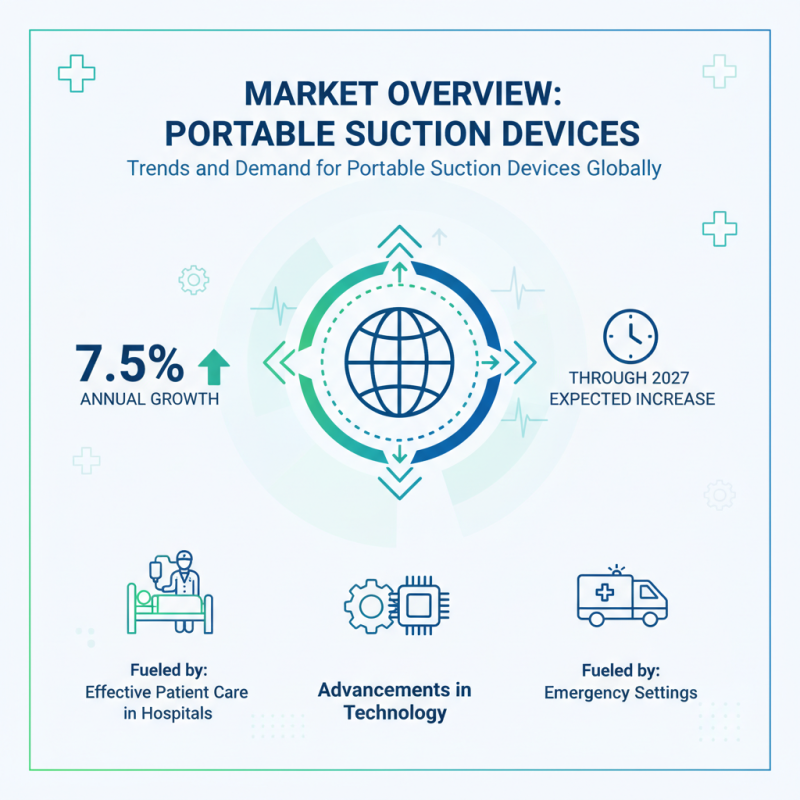
The global market for portable suction devices is witnessing significant growth. Research indicates that the demand for these devices is expected to increase by 7.5% annually through 2027. This rise is fueled by advancements in technology and the growing emphasis on effective patient care in both hospitals and emergency settings.
As healthcare systems evolve, the need for efficient and reliable suction machines becomes paramount. Portable devices are particularly valuable in critical situations, such as during surgeries or in ambulances. Data from industry reports highlight that around 45% of healthcare professionals prefer portable options due to their flexibility and ease of use. However, some challenges remain. In certain regions, the availability of high-quality devices can be inconsistent. This inconsistency raises questions about the reliability of suction devices used in emergency scenarios.
Moreover, there is an observable trend towards integrating digital technology in medical devices. Manufacturers are exploring tele-monitoring features and IoT capabilities. Yet, many healthcare providers still rely on basic models, which may not meet advanced needs. Overall, the market for portable suction machines presents opportunities but also demands a careful examination of quality standards and access.
Comparison of Suction Performance: Flow Rate and Suction Pressure Analysis
When choosing a portable suction machine, suction performance is crucial. Flow rate and suction pressure are the primary indicators of effectiveness. Flow rate refers to the volume of fluid the machine can remove within a given time. Higher flow rates are often desired in emergency situations. Suction pressure, measured in mmHg, indicates the strength of the vacuum created. A higher suction pressure ensures that thick secretions can be effectively removed.
Tip: Always check the specifications before purchasing. Ensure the machine meets the required suction pressure for your intended use. It is important to note that not all machines provide the same level of performance. Devices may claim high flow rates but fall short in actual practice. User reviews and clinical findings can offer insights into real-world efficacy.
Consider regulatory compliance as well. Portable suction machines should meet international standards for safety and performance. Machines that lack proper certifications can pose risks and may not perform as expected. It is essential to assess the reliability of a device based on established guidelines. Always prioritize patient safety and available support resources when making a decision.
Comparison of Suction Performance for Top Medical Portable Suction Machines
Top Brands in the Industry: A Review of Leading Portable Suction Machine Models
Portable suction machines have become indispensable in various medical settings. Their versatility and compact design allow easy transport and usage in emergencies. According to a report by Global Market Insights, the demand for portable suction machines is increasing steadily, anticipated to reach $350 million by 2025. This growth highlights the importance of quality and reliability in these devices.
Several leading models have emerged in the market. Notably, they are designed for efficient suction capabilities, with maximum flow rates often exceeding 30 liters per minute. Key features include battery operation, ensuring functionality in remote locations. Users appreciate models equipped with high-efficiency motors, yet some reports indicate the need for better durability in challenging environments.
Furthermore, ease of maintenance is critical. Many healthcare professionals suggest that while certain models excel in suction power, they fall short in user-friendliness. Simplicity in design can often make a significant difference in high-pressure situations. Manufacturers must continuously innovate, reflecting feedback to meet evolving healthcare needs. This ongoing improvement process is vital for maintaining trust in healthcare technology.
Regulatory Standards and Certifications for Portable Medical Suction Devices
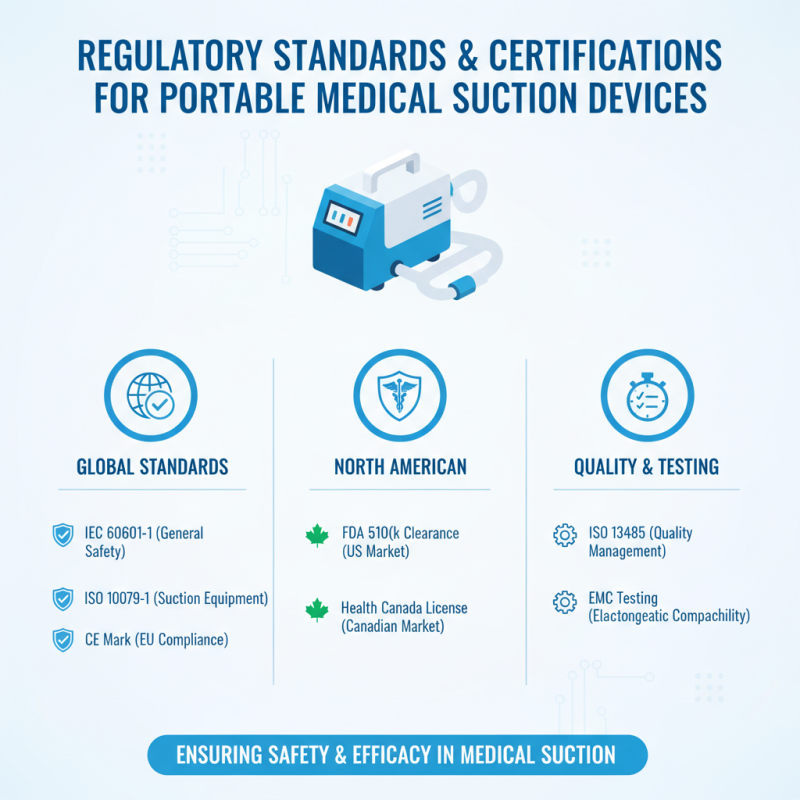
When selecting medical portable suction machines, understanding regulatory standards is crucial for ensuring safety and efficacy. Portable medical suction devices are subject to varying international regulations, including those set forth by the FDA and ISO. The FDA categorizes these devices as Class II, which requires them to meet specific performance standards. According to a recent industry report, over 75% of medical facilities emphasize the importance of compliance with these regulations when procuring medical devices.
Certification is another key aspect. Devices need to display proper markings, such as CE marks in Europe and FDA approval in the U.S. For instance, failure to meet the ISO 13485 standard can hinder market access globally. Many manufacturers may overlook these certifications, leading to potential risks in patient care. A report indicated that 30% of non-compliant devices were linked to increased complication rates in clinical settings.
Evidently, compliance costs can be substantial, but these are outweighed by the benefits of patient safety. In January 2023, a study showed that patients treated with certified machines had a 40% lower rate of complications. Therefore, global buyers must prioritize regulatory adherence when selecting portable suction machines, noting that the stakes are incredibly high in patient outcomes.