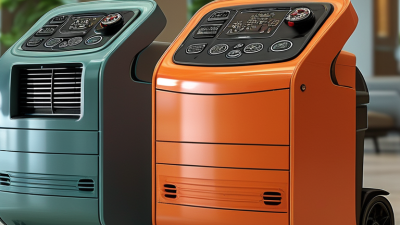
How to Choose a Central Suction Unit?
Selecting a Central Suction Unit is a clinical, engineering, and financial decision. It affects patient safety, procedure continuity, noise levels, and maintenance workload. A unit that looks powerful on paper may perform poorly under simultaneous demand.
Market reports from Grand View Research and Fortune Business Insights indicate steady growth in medical vacuum systems. Their findings reflect expanding healthcare facilities, stricter infection-control expectations, and rising demand for reliable clinical infrastructure. These reports are useful for understanding market direction, but they cannot replace site-specific calculations.
The right choice begins with actual usage. Count operating rooms, dental chairs, emergency bays, and future connection points. Then estimate peak vacuum demand, not only average consumption. ISO 7396-1 provides a recognized framework for medical gas pipeline systems, including design, testing, and performance considerations. NHS Health Technical Memorandum 02-01 also offers practical guidance for medical gas and vacuum installations.
Small details matter. Check ultimate vacuum, airflow, motor duty cycle, receiver capacity, filtration, oil management, and alarm functions. Confirm whether the system can maintain stable suction when several outlets operate together. Ask for independently documented test results, service intervals, spare-parts availability, and response times.
Energy use deserves attention. The U.S. Department of Energy notes that healthcare buildings are highly energy-intensive, making efficient equipment selection financially important. Yet efficiency should not reduce clinical resilience. Redundancy, automatic changeover, and emergency backup may cost more initially. They can prevent expensive interruptions later.
No checklist is perfect. Local regulations, room layouts, altitude, and maintenance skills can change the final decision. A qualified medical-gas engineer should verify the design before purchase and commissioning.
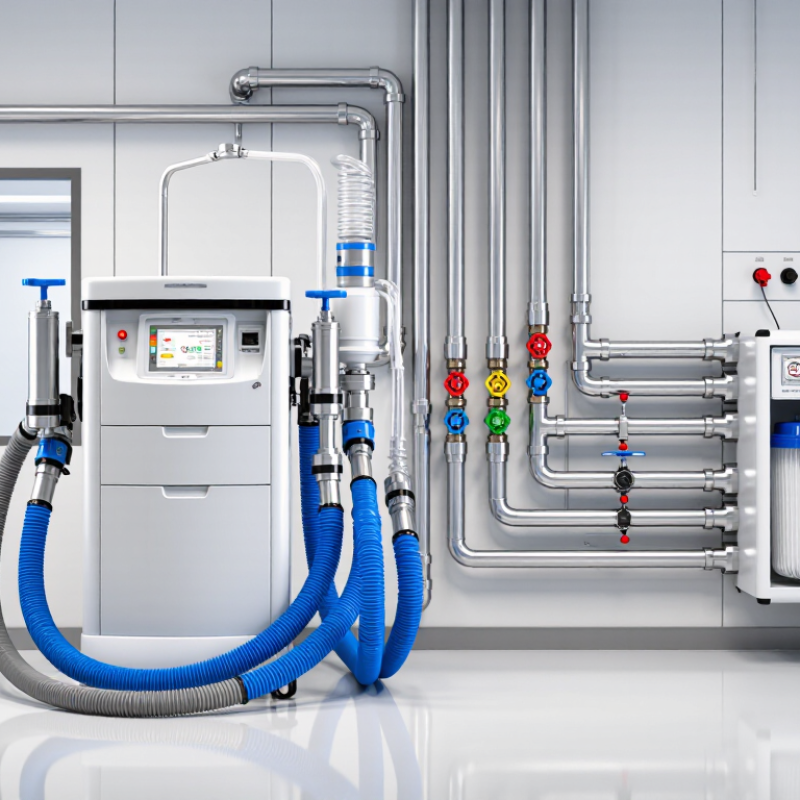
Define the Central Suction Unit’s Purpose and Operating Requirements
A central suction unit should match its clinical purpose, not merely its maximum vacuum rating. Map every point of use, including operating rooms, intensive care beds, dental areas, and emergency bays. Record simultaneous demand, expected peak flow, vacuum pressure, and daily operating hours. ISO 7396-1 requires medical vacuum systems to maintain safe performance during normal operation and foreseeable faults. That means redundancy matters. One failed pump should not silence an entire ward.
Review patient risk and maintenance conditions together. The World Health Organization reports that about one in ten patients experiences harm during healthcare, with more than half considered preventable. Reliable suction cannot remove every risk, but poor capacity planning can create avoidable delays. Check the receiver volume, pipeline size, alarm location, filtration method, and emergency backup. HTM 02-01 also emphasizes plant-room ventilation, testing, and documented commissioning. A quiet system is not automatically a safe system.
Tips: Build a demand schedule using real clinical observations, not assumptions. Measure peak use during surgery changes and emergency admissions. Keep critical areas on separate branches where practical. Ask engineers to test the lowest-pressure outlet, not only the nearest one. I would also challenge the first design estimate. It may look efficient, yet hidden demand often appears after expansion. Record baseline vacuum, flow, noise, and alarm response before handover. Recheck them routinely. Small drift can become a clinical problem.
Assess Suction Capacity, Vacuum Pressure, and Airflow Needs
How to Choose a Central Suction Unit?
Assess Suction Capacity, Vacuum Pressure, and Airflow Needs
Choosing a central suction unit starts with the real workload, not the largest specification sheet. Count every outlet that may operate simultaneously, then estimate each outlet’s airflow demand. Medical, laboratory, and workshop systems can have very different requirements. Measure the real demand.
Airflow should be checked at the required vacuum pressure, not only under free-air conditions. A unit may show impressive airflow at zero vacuum but perform poorly under load. Review the pressure drop from tubing, filters, separators, valves, and bends. Small losses matter. The farthest outlet should still receive stable suction during peak use. A practical assessment also includes leak testing, because tiny gaps can quietly reduce performance.
Vacuum pressure must match the process and equipment being served. Excessive vacuum may damage delicate components, while insufficient pressure can create unreliable operation. My first estimate was too optimistic because I ignored simultaneous demand during shift changes. That mistake changed the final capacity calculation. Allow a measured reserve, but avoid excessive oversizing, which can increase energy use, noise, and maintenance. Check the pump’s duty cycle, heat removal, filter loading, and rated airflow before approval. Keep written test results for future adjustments.
How to Choose a Central Suction Unit?
Assess the required suction capacity, vacuum pressure, and airflow before selecting a central suction unit. The chart shows typical planning targets for different healthcare areas; final sizing should consider simultaneous usage, pipe losses, receiver volume, and applicable local standards.
How to read the chart: Higher airflow supports more simultaneous suction points, while higher vacuum capacity helps maintain suction through longer piping and restrictive filters. Select equipment with sufficient reserve capacity rather than sizing only for the average load.
Compare Pump Types, Energy Use, and Noise Levels
How to Choose a Central Suction Unit?
Pump type affects energy use, maintenance, and room comfort. Dry claw pumps avoid oil contamination and suit clean clinical environments. However, their high-speed rotors may create sharper noise during heavy demand. Oil-lubricated rotary vane pumps often deliver steady vacuum with smoother sound. They need oil checks and filter changes. Liquid-ring pumps handle continuous duty well, but they consume water and may waste more energy. U.S. Department of Energy motor-system assessments report that motor-driven equipment can represent 60–70% of industrial electricity use. That figure is not specific to suction systems, but it explains why small efficiency losses matter.
Noise needs a real measurement, not a brochure impression. NIOSH recommends limiting occupational exposure to 85 dBA over an eight-hour shift, using a 3 dB exchange rate. Compare tested sound-power data under ISO 3744 conditions, then inspect the installation site. A pump beside a thin partition can sound louder than its laboratory rating. Field technicians also check vibration, pipe diameter, leakage, and cycling frequency. A smaller pump may use less power, yet run continuously. That is an easy mistake.
Tips: Record peak and average suction demand for one week. Request energy use in kWh per operating hour, not only motor horsepower. Ask for measured dBA at one metre. Include ventilation, acoustic isolation, and maintenance access in the decision. The quietest pump is not always the most efficient. Sometimes, the “best” selection needs another review.