Choosing the right suction machine can be a daunting task. Dr. Sarah Williams, a renowned expert in respiratory care, once stated, "The right suction machine can truly change patient outcomes." Understanding your specific needs is crucial.
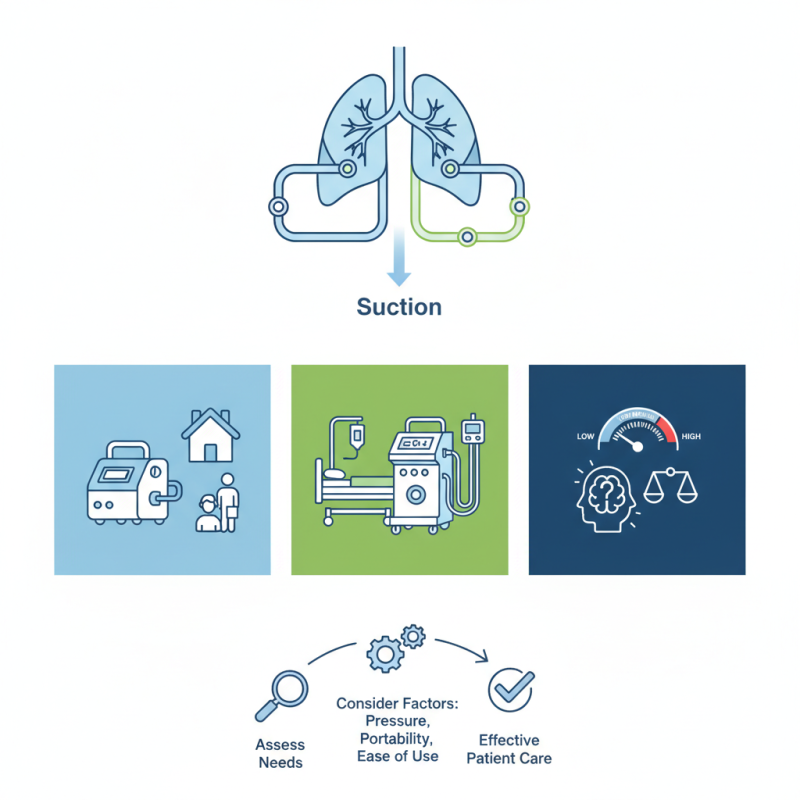
There are many types of suction machines available. Each is designed for different medical situations. For instance, portable models may cater to home care, while hospital-grade machines are essential for intensive settings. Consider factors like suction pressure, portability, and ease of use.
Reflecting on your choices is also vital. Not all suction machines are created equal, and misjudgments can lead to ineffective patient care. You might think you need a high-power machine, but a lower model could suffice. Assess your needs carefully to avoid complications.
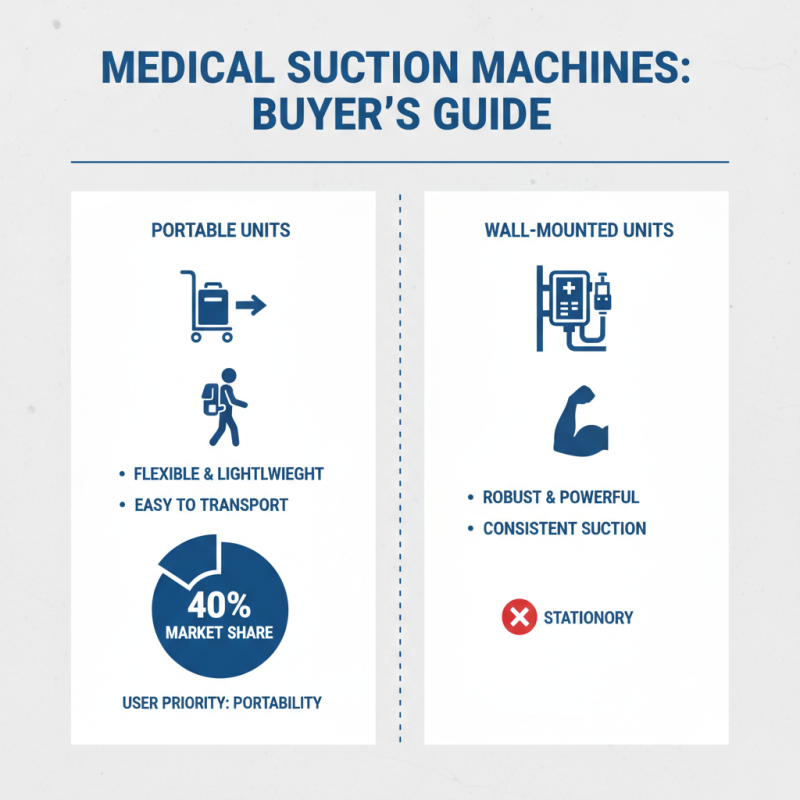
When you're in the market for a suction machine, it's crucial to understand the different types available. Portable suction machines offer flexibility. They're lightweight and easy to transport. However, they may lack power for heavy-duty tasks. On the other hand, wall-mounted units are robust. They provide consistent suction but are stationary. Recent industry data shows that portable machines account for nearly 40% of the market share. Many users prioritize portability.
Another option is battery-operated devices. These are handy for emergencies. They can be used in remote areas without power. But, battery life can be an issue. Consumers should be wary of how long a charge lasts. According to reports, between 15-20% of users face battery-related complaints.
Tips: Always consider your specific needs. Assess the suction power, size, and portability. Think about where you'll use the machine most. Sometimes, less sophisticated machines work better for basic tasks. Don’t overlook the importance of ease of cleaning. Maintenance can affect long-term performance and reliability.

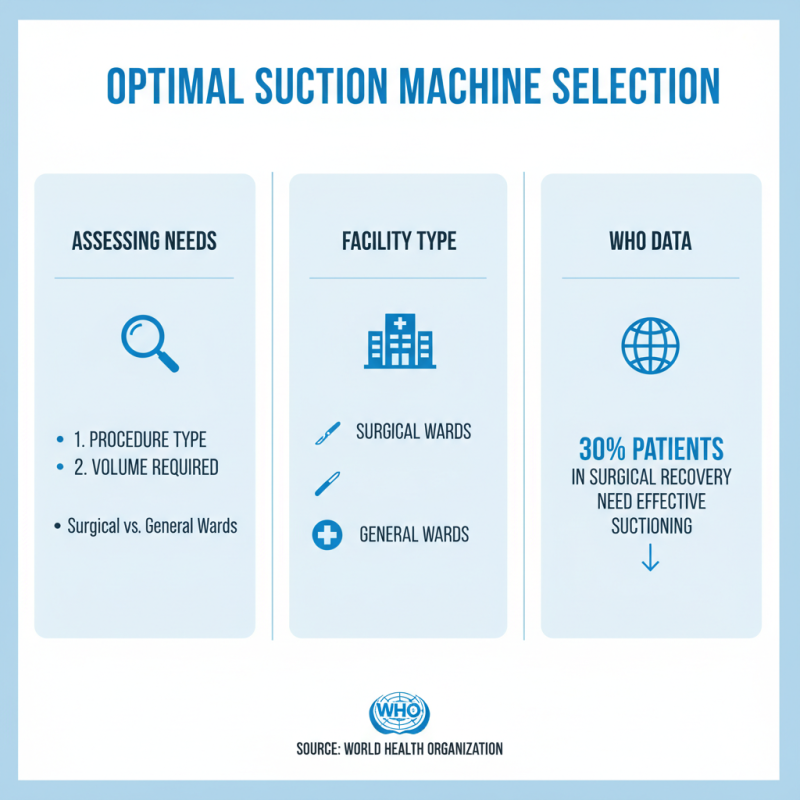
When selecting a suction machine, identifying your specific needs is crucial. Medical facilities should assess the procedures performed and the volume of suction needed. For instance, surgical wards may require different suction capacities compared to general wards. According to data from the World Health Organization, up to 30% of patients in surgical recovery may experience complications that necessitate effective suctioning.
Your environment matters. A portable suction machine may be ideal for emergency services, but a stationary unit is better for intensive care units. Consider the power source too. Battery-operated machines can offer mobile convenience, yet they might lack the suction strength needed in high-demand scenarios. A recent report indicated that 40% of healthcare professionals feel unsure about choosing the right machine, highlighting a need for education in this area.
Patient safety is another critical factor. Machines with adjustable suction pressure allow for tailored needs across varying patient conditions. They can help prevent complications linked to inappropriate suction levels. Balancing efficacy with safety is essential. A quick look at equipment maintenance can also reveal prolonged service life challenges. Regular checks are often overlooked, impacting performance when it matters most.
When selecting a suction machine, consider several key features tailored to your needs. Suction power is crucial. Machines typically range from 80 mmHg to 550 mmHg. A higher suction level may be necessary for specific medical conditions, while others might only need moderate levels. Always check the flow rate too. Many machines allow for 20 to 30 liters per minute, which impacts efficiency during use.
Portability should not be overlooked. If you need a machine for different locations, choose a lighter model. Battery-operated machines offer flexibility, especially in emergency settings. Look for an easy-to-clean design. Some designs allow quick access to parts for maintenance. Regular cleaning reduces infection risks.
Tip: Focus on your usage environment. If it's often in a medical setting, prioritize robust features. If it's for home care, opt for user-friendly models.
Noise level might seem minor but can affect comfort. Many machines operate between 50 dB to 70 dB. For use in shared spaces, a quieter model might be best.
Tip: Always feel free to ask for demonstrations. Not all machines work the same way. Testing in person can reveal flaws unseen in specifications.
Choosing a suction machine is not just about the technical specifications. Evaluating brand reputation is crucial. Some brands have established themselves over years, but that doesn’t guarantee quality. It’s important to dig deeper into customer reviews. Real-life experiences often reveal strengths and weaknesses that specifications don’t cover.
Customer feedback can be very telling. High ratings don’t always mean satisfaction. A review may highlight a product’s usability or its shortcomings. Look for trends in comments. Are users often mentioning reliability or battery life? These details matter. A negative review might point out issues that could affect your experience. Don’t ignore them.
Another aspect is how responsive brands are to concerns. If complaints are frequent and unresolved, it raises a red flag. Reflect on your needs. If portability is essential, how well do users say the machine performs? Take time to compare different models. Each choice has its pros and cons. Understanding this can lead to better decision-making.
| Model | Power (Watts) | Weight (lbs) | Suction Strength (mmHg) | Price ($) | Average Customer Rating | Number of Reviews |
|---|---|---|---|---|---|---|
| Model A | 150 | 10 | 560 | 200 | 4.5 | 120 |
| Model B | 180 | 8 | 650 | 250 | 4.7 | 200 |
| Model C | 120 | 12 | 500 | 150 | 4.3 | 80 |
| Model D | 200 | 9 | 700 | 300 | 4.6 | 150 |
When budgeting for a suction machine, consider the initial purchase price. High-quality machines may come at a higher cost. However, cheaper options could lead to expensive repairs later. Calculate your budget carefully. Factor in not just the purchase but also ongoing maintenance costs. These include filters and parts that may need regular replacement.
Maintenance expenses can vary greatly. Some machines require more frequent servicing. This could add up over time. Estimate these costs based on manufacturer guidelines and user reviews. Don’t overlook the importance of training costs. Ensure that everyone using the machine knows how to handle it properly. Misuse can lead to additional expenses.
Consider the long-term benefits of investing in a reliable device. Sometimes, spending a bit more upfront results in savings down the line. Reflect on your needs and usage frequency. A professional might suggest options based on your specific requirements. Skipping research could lead to regrets. Strive for the best balance between affordability and quality in your choice.