Leave Your Message

Top Decubitus Mattress Manufacturers for Global Buyers

Choosing a Decubitus Mattress manufacturer requires more than comparing catalog prices. Global buyers need products supporting pressure redistribution, comfort, and practical nursing care. A reliable supplier should explain its foam, air-cell, or hybrid design clearly. It should provide testing records, user instructions, and traceable quality controls. Claims such as “zero risk” deserve caution. No mattress replaces repositioning, skin checks, or professional assessment. Details matter.

This guide examines leading manufacturers through a practical buyer’s lens. It considers clinical experience, product engineering, manufacturing consistency, and after-sales support. Key points include pressure settings, load capacity, noise levels, moisture management, cleaning procedures, and emergency deflation. For hospitals, nursing homes, and home-care distributors, small design choices can affect daily work. A quiet pump may improve sleep. A removable cover may simplify infection-control routines. Yet performance varies with patient weight, posture, climate, and care practices. Results are not automatic.

International purchasing adds another layer. Buyers should verify certifications for their market, electrical compatibility, warranty terms, spare-part availability, and shipping conditions. Factory audits, sample testing, and transparent references can reveal more than polished brochures. This selection does not treat one supplier as perfect. Some information may change over time. Careful verification remains essential before signing a contract.

Top Decubitus Mattress Manufacturers for Global Buyers

Decubitus Mattresses: Purpose, Types, and Key Buying Criteria

Top Decubitus Mattress Manufacturers for Global Buyers

Decubitus Mattresses: Purpose, Types, and Key Buying Criteria

Decubitus mattresses reduce sustained pressure on vulnerable body areas. They support patients with limited mobility, fragile skin, or prolonged bed rest. According to the Agency for Healthcare Research and Quality, over 2.5 million hospital patients develop pressure ulcers annually in the United States. That figure shows why mattress selection requires clinical judgment. Fit matters.

Common types include high-density foam, alternating-pressure air, low-air-loss, and hybrid systems. Foam models offer quiet support and simpler maintenance. Alternating-air models change pressure zones through an electric pump. Low-air-loss designs help manage heat and moisture around the skin. Hybrid models combine stability with active pressure redistribution. Type depends on risk, mobility, care setting, and body weight.

Global buyers should examine weight limits, mattress dimensions, pump noise, power compatibility, cleaning procedures, and backup performance. Ask manufacturers for pressure-mapping evidence, test methods, warranty terms, and replacement-part availability. The 2019 NPIAP, EPUAP, and PPPIA guideline emphasizes individualized risk assessment and appropriate support surfaces. A 2021 Cochrane review found that evidence comparing support surfaces remains uncertain or low in quality. That matters. A premium mattress is not automatically the best choice. Buyers should also test transfer comfort, alarm visibility, and caregiver usability before large orders. Some specifications look impressive, but bedside experience may disagree.

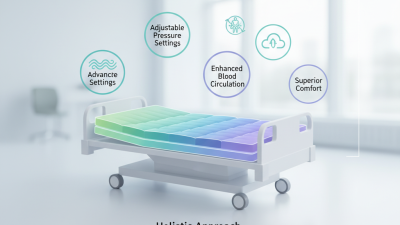
Decubitus mattresses are designed to redistribute pressure, reduce shear, and support moisture and temperature management for people with limited mobility. The chart shows typical market thickness ranges by mattress type. Buyers should also verify patient weight capacity, pressure-control modes, cleaning requirements, pump noise, power-failure protection, and compliance with applicable medical-device regulations. Specifications vary by model and supplier.

How to Evaluate Decubitus Mattress Manufacturers Worldwide

Evaluating decubitus mattress manufacturers worldwide requires more than comparing prices. Review their clinical evidence, material specifications, and quality systems. A 2020 systematic review in the International Wound Journal reported a pooled hospital pressure injury prevalence of about 12.8%, with major differences between care settings. This variation makes local validation important. Ask manufacturers for test methods, load ranges, and results for different body weights.

Check whether the mattress supports pressure redistribution, moisture control, and safe repositioning. The 2019 International Guideline for Pressure Injury Prevention recommends selecting support surfaces according to patient risk, mobility, body shape, and care environment. Look for documented testing under relevant ISO standards, including ISO 20342-1 where applicable. Manufacturing experience matters, but it is not proof of clinical performance. I would also inspect seam quality, pump noise, cleaning instructions, and spare-part availability. Small failures become expensive in busy wards.

Tips: Request independent laboratory reports, not only supplier summaries. Ask for a trial period with real patients and documented skin assessments. Verify warranty terms across borders. Be cautious with impressive claims; some evidence may be incomplete or poorly matched to your patient group. A manufacturer should explain limitations clearly. That honesty is useful.

Top Decubitus Mattress Manufacturers for Global Buyers - How to Evaluate Decubitus Mattress Manufacturers Worldwide
Evaluation Dimension Realistic International Benchmark Evidence Global Buyers Should Request Why It Matters When Comparing Manufacturers
Product Category Alternating-pressure air mattresses, static-air systems, low-air-loss systems, replacement mattresses, and overlay mattresses are the main commercial categories. Product catalogue, intended-use statement, user manual, mattress dimensions, and compatibility information. Different categories address different levels of pressure-injury risk and are not directly comparable on price alone.
Pressure-Care Function Alternating systems commonly use two or more air circuits with a cycle time often adjustable within approximately 6–12 minutes. Static systems provide continuous pressure redistribution without alternating cycles. Pressure-cycle specification, control-panel photographs, alarm logic, and independent performance test results. Cycle time, pressure range, and control accuracy affect comfort, clinical suitability, and caregiver usability.
Supported User Weight Many adult systems are designed for approximately 100–200 kg, while bariatric models may support higher loads. The exact safe working load must be confirmed for each model. Technical data sheet showing safe working load, mattress dimensions, and any restrictions related to patient height or body shape. Using a mattress below its rated capacity can reduce therapeutic performance and create safety risks.
Mattress Construction Common materials include medical-grade PVC, polyurethane-coated fabric, nylon, and TPU. Cell height and replaceable-cell design vary by model. Material declaration, thickness data, seam-construction details, cell-replacement instructions, and sample inspection. Material quality influences durability, cleaning resistance, noise, repairability, and total cost of ownership.
Waterproofing and Cleaning Healthcare mattresses generally require a fluid-resistant or waterproof cover that can be cleaned with approved hospital disinfectants. Cleaning and disinfection instructions, chemical-compatibility list, seam test results, and cover-removal procedure. Inadequate fluid protection can increase infection-control problems and shorten product life.
Pump Noise Quiet hospital-use pumps are commonly designed to operate below approximately 35–45 dB(A), although measurement methods and operating modes differ. Noise test report identifying the measurement distance, operating mode, room conditions, and test instrument. Lower noise is important in bedrooms, long-term-care facilities, and overnight use.
Electrical Safety Medical electrical equipment is commonly evaluated against IEC 60601-1, with applicable collateral and particular standards depending on the product design and target market. Current electrical safety test report, rated voltage and frequency, leakage-current results, fuse information, and power-cord specifications. Electrical documentation helps importers assess patient safety and market-access requirements.
Risk Management Manufacturers of regulated medical devices commonly maintain a risk-management process aligned with ISO 14971. Risk-management summary, hazard controls, alarm-failure analysis, and post-market corrective-action process. A documented risk process indicates that foreseeable hazards such as power failure, leakage, and pump malfunction are systematically addressed.
Quality Management System ISO 13485 is the widely recognized quality-management standard for medical-device manufacturers. Certification scope should cover the relevant product and manufacturing site. Valid ISO 13485 certificate, certification body, certificate scope, site address, and expiry date. A certificate for an unrelated site or product category does not provide the same assurance as product-specific coverage.
Biocompatibility and Skin Contact Patient-contacting materials may require biological-evaluation evidence based on the nature and duration of contact, commonly using the ISO 10993 series as a reference. Material list, biological-evaluation report, test laboratory details, and declarations for mattress cover and patient-contact surfaces. Evidence is especially important for prolonged contact with vulnerable or damaged skin.
Regulatory Readiness Requirements differ by destination. European sales may involve Regulation (EU) 2017/745, while the United States requires applicable FDA registration, listing, and quality-system obligations. Other markets may require local registration. Declaration of conformity where applicable, device classification rationale, registration details, labeling samples, and authorized-representative information when required. Regulatory readiness reduces customs delays, relabeling costs, and the risk of selling a non-compliant device.
Alarm and Backup Features Common safety features include low-pressure alarms, power-failure alarms, audible or visual alerts, CPR deflation, transport settings, and battery or emergency-air options on selected models. Alarm test procedure, alarm-volume data, backup duration, CPR function instructions, and failure-mode test records. Backup functions are critical when the mattress is used continuously or with high-risk patients.
Warranty Coverage Commercial warranty periods often range from 1–3 years for pumps and approximately 1–2 years for mattress components, subject to local terms. Written warranty, exclusions, response time, spare-parts policy, repair process, and warranty-validity conditions. A longer warranty is useful only when replacement parts and technical support are realistically available.
Spare Parts Availability Important service parts include air hoses, connectors, fuses, filters, pump covers, replacement cells, covers, and control components. Spare-parts catalogue, recommended stock list, part-number system, prices, and stated availability period. Modular replacement parts can reduce downtime and lower lifecycle costs compared with full-unit replacement.
Production Capacity Capacity should be assessed by verified monthly output, available production lines, testing stations, and peak-season planning rather than by a general supplier statement. Factory audit, production-line photographs or video, capacity declaration, recent order history with confidential data removed, and quality-inspection records. Reliable capacity reduces shipment delays and helps buyers plan recurring hospital or distributor orders.
Minimum Order Quantity Stock models may be available in small trial quantities, while customized colors, packaging, labels, and electrical configurations often require higher minimum orders. Formal quotation showing MOQ for standard products and separate MOQ requirements for customization. Understanding MOQ prevents unexpected tooling, packaging, or customization charges.
Typical Production Lead Time Standard products commonly require approximately 15–45 calendar days after confirmation. Custom packaging, regulatory labeling, or peak demand may extend the schedule. Production schedule, raw-material availability, sample-approval milestones, and written shipment date in the purchase contract. Lead-time transparency is essential for hospital tenders, seasonal demand, and distributor replenishment.
Export and Documentation Support Professional exporters should be able to provide commercial invoices, packing lists, certificates of origin where applicable, product manuals, and transport documentation. Redacted export document samples, HS-code proposal, carton dimensions, net and gross weights, and palletization details. Complete documentation supports customs clearance and reduces avoidable logistics costs.
Private Label and Customization Common options include logo printing, carton artwork, user-manual translation, color selection, plug type, voltage configuration, and software or alarm-language customization. Artwork approval workflow, sample policy, tooling charges, intellectual-property terms, and change-control procedure. Customization should not compromise regulatory labeling, traceability, or service-part compatibility.
After-Sales Technical Support Strong suppliers provide multilingual manuals, troubleshooting guides, remote training, response-time commitments, and access to service parts. Support contact details, service-level agreement, training materials, escalation process, and sample troubleshooting flowchart. Responsive technical support is particularly important when products are sold through overseas distributors.
Supplier Verification Scorecard Regulatory evidenceFactory auditSample testingService capability Use a weighted evaluation: regulatory compliance 30%, product performance 25%, quality system 20%, delivery capacity 15%, and after-sales support 10%. A documented scorecard creates a consistent comparison method without relying only on price or marketing claims.
Buyer Note: The figures shown are commonly observed industry benchmarks or internationally recognized compliance references, not guarantees for every supplier or model. Always verify the exact product specification, certificate scope, regulatory status, test method, and contractual service terms before placing an order.

Leading Manufacturer Profiles and Product Specializations

Global buyers should assess decubitus mattress manufacturers by clinical specialization, not catalog size. A 2024 report from MarketsandMarkets estimates steady growth in the pressure ulcer prevention market, driven by aging populations and longer hospital stays. That demand favors manufacturers with documented testing, traceable materials, and trained technical support.

Foam-focused manufacturers typically supply high-density memory foam, layered cores, and moisture-resistant covers. Their products suit home care and lower-risk patients because they operate quietly and require limited maintenance. Air-system specialists build alternating-pressure and low-air-loss mattresses. These systems use digital pumps, adjustable cycles, and audible alarms. Hospital procurement teams should verify noise levels, power-failure protection, cleaning procedures, and replacement-pump availability.

Bariatric manufacturers concentrate on wider platforms, reinforced edges, and higher safe working loads. Some also provide rental fleets and on-site fitting, which can reduce delays for community care providers. The Agency for Healthcare Research and Quality has reported that pressure injuries affect about 2.5 million hospitalized people annually in the United States. That figure makes staff training and risk assessment as important as mattress design.

Independent testing matters. Manufacturers should disclose pressure-mapping results, fire-safety testing, antimicrobial claims, and warranty limits. Claims can sound stronger than the evidence. Buyers should request sample data under realistic loads, including a 120-kilogram user, elevated head positioning, and repeated cleaning. A weakness remains common: some product literature describes comfort but gives little clinical outcome data. That gap deserves closer scrutiny.

Global Standards, Certifications, and Quality Assurance

Top Decubitus Mattress Manufacturers for Global Buyers

Global Standards, Certifications, and Quality Assurance

Reliable decubitus mattress manufacturers should show more than attractive product photos. Buyers should request an ISO 13485 quality management certificate, verified by an accredited certification body. This standard indicates controlled medical-device processes, but it does not prove every mattress performs perfectly. For powered systems, electrical safety testing may follow IEC 60601-1. Materials touching skin may require biocompatibility evaluation under ISO 10993. Requirements differ by destination, so local regulatory checks remain essential.

Quality assurance should continue after certification. Ask for pressure-distribution test results, air-cell durability data, noise measurements, and alarm-function checks. Production records should identify materials, inspection dates, and batch numbers. A trustworthy factory can explain its sampling plans and corrective-action process without avoiding difficult questions. In practice, I have found that small details matter, such as stable pump airflow and clean, sealed seams. A certificate is not a magic shield.

Tips: Confirm whether certificates cover the exact model, not only the factory. Request recent test reports and sample inspection records. Check user weight limits, cleaning instructions, replacement-part access, and warranty terms. Test a sample for several days when possible. Comfort can vary by body shape and clinical condition, so laboratory results should not replace professional assessment. Even experienced buyers can overlook packaging damage during long-distance shipping. Photograph cartons before opening them.

International Purchasing, Customization, and After-Sales Support

Top Decubitus Mattress Manufacturers for Global Buyers

International purchasing starts with clinical requirements, not a supplier’s catalog. Buyers should confirm mattress dimensions, patient weight range, pressure settings, noise level, and cleaning procedures. A hospital in a humid region may need different cover materials than a clinic in a dry climate. Request product drawings, test reports, user instructions, and sample units before placing a large order.

Small details matter.
Customization should be practical and documented.

Manufacturers may adjust pump voltage, plug type, mattress thickness, labels, packaging, and control-panel language. Ask whether changes affect testing, delivery time, spare parts, or warranty coverage. I have seen buyers approve a custom design too quickly, then discover that replacement covers were unavailable. That mistake is avoidable.

Confirm every revised specification in a signed document.

After-sales support often reveals the real manufacturing capability. Reliable suppliers provide installation guidance, troubleshooting videos, response targets, and replacement-part lists. International buyers should ask who handles technical questions across time zones. A clear warranty should define excluded damage, repair procedures, shipping responsibility, and expected service life. Keep records of serial numbers and maintenance dates. Remote support helps, but it cannot replace trained local technicians in every market.

Some purchasing teams overlook this gap. It deserves more attention.