Choosing the right Mobile Suction Machine is a practical clinical decision, not merely a purchasing exercise. In emergency rooms, ambulances, dental clinics, and home-care settings, reliable suction can support airway clearance when seconds matter. Yet different environments demand different designs, capacities, noise levels, and power options. A compact unit may fit neatly beside a patient’s bed, but its battery could disappoint during a long transfer.
This guide presents 10 practical tips for evaluating performance, portability, safety, and long-term value. It considers suction pressure, airflow, collection canisters, battery endurance, filter protection, cleaning requirements, and alarm systems. It also highlights details that are easy to overlook, such as tubing compatibility and the visibility of fluid levels. Small details matter. A handle that feels comfortable during a short demonstration may become awkward after repeated lifting.
Reliable selection should combine manufacturer documentation, qualified clinical advice, and real-world user experience. Product labels alone rarely reveal how a machine behaves on uneven vehicle floors or in a quiet recovery room. That assumption can fail. Buyers should verify applicable safety certifications, service support, warranty terms, and local clinical requirements before purchase. No single Mobile Suction Machine suits every patient or facility. The best option depends on intended use, expected frequency, operator training, and available maintenance resources. Measure twice. Then compare carefully. This balanced approach can reduce avoidable costs while supporting safer, more confident clinical practice.
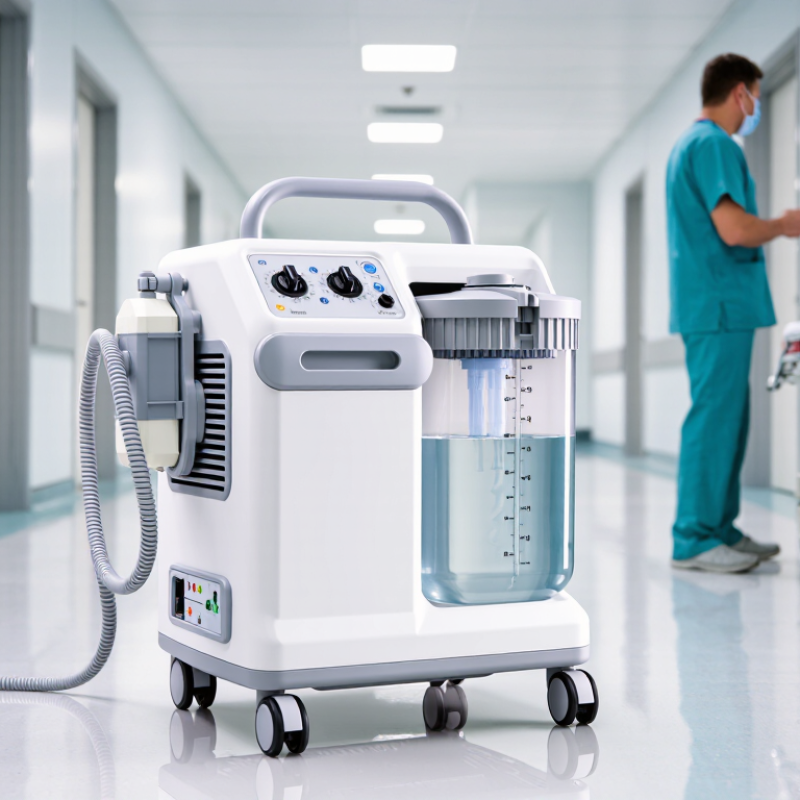
Choosing the best mobile suction machine starts with clinical need, not advertised power. The current ISO 10079-1 framework classifies electrically powered suction equipment by vacuum level and airflow. This creates four practical groups: high vacuum/high flow, high vacuum/low flow, low vacuum/high flow, and low vacuum/low flow. Match the group to the procedure, patient age, secretion thickness, and care setting. A higher number is not automatically better. Excessive negative pressure can increase tissue injury risk, especially in fragile airways.
Check the machine under real conditions. A useful unit should provide stable vacuum control, readable gauges, overflow protection, secure tubing, and a canister that is easy to inspect. Battery endurance matters during transfers. Review charging time, alarm visibility, noise, and cleaning access. WHO’s Global Report on Assistive Technology (2022) estimates that 2.5 billion people need at least one assistive product, with demand exceeding 3.5 billion by 2050. That scale reinforces the need for reliable, maintainable equipment. I would not trust a brochure alone. Ask for test records showing vacuum and free-air flow against ISO 10079-1 methods. Confirm whether local clinical protocols require different limits. Staff feedback also matters; a machine that is technically compliant may still be awkward beside a bed or inside an ambulance. Small details can decide safe use.
Choosing a mobile suction machine requires more than reading its maximum vacuum. In clinical practice, kPa shows suction strength, while L/min shows how quickly air and secretions move. The World Health Organization’s technical specifications for suction equipment emphasize adjustable negative pressure, a visible gauge, and dependable collection capacity. ISO 10079-1 also treats vacuum control, airflow, and overflow protection as essential safety considerations.
For adult airway care, many mobile units provide approximately 20–40 L/min airflow and vacuum levels near 60–75 kPa. These figures are useful benchmarks, not automatic guarantees. A higher kPa can improve performance with thick secretions, but excessive suction may increase tissue trauma risks.
Check whether the machine maintains airflow when the tubing bends or the filter becomes wet. That practical test matters.
Canister capacity deserves equal attention. A 1–2 litre container suits many routine transfers, while larger containers reduce interruptions during prolonged care. However, bigger is not always better. A heavy, half-filled canister can make transport awkward. The WHO’s 2023 medical-device guidance also highlights visible volume markings, secure lids, and overflow protection for safer handling.
I once focused too heavily on peak vacuum. That was a mistake. Compare working vacuum, free-airflow performance, noise, battery duration, and usable canister volume under realistic conditions. Small differences become obvious beside a patient’s bed.
Choosing a mobile suction machine requires more than checking maximum vacuum. In daily clinical work, battery runtime, noise, and electrical safety affect every transfer, procedure, and emergency response. A useful test begins with a fully charged battery and the intended tubing attached. Record operating time under realistic suction, not only the manufacturer’s ideal figure. Patient care rarely follows laboratory conditions.
Tip 1: Ask for runtime at working vacuum. Short battery life can create avoidable interruptions. Check charging time, battery replacement access, and low-power warnings. A spare battery may help, but it also adds weight and maintenance.
Tip 2: Measure noise from the user’s position. A loud pump can disturb communication, especially near sleeping patients. Request dB information under load, because idle readings may be misleading. A quiet unit is not automatically safer. Confirm that suction performance remains stable.
Tip 3: Review IEC 60601-1 evidence carefully. Ask for a valid test report or certification from a competent testing organization, rather than relying on a printed claim. Check electrical ratings, applied-part classification, leakage-current protection, and charging-system safety. Local requirements may also apply. IEC 60601-1 alone may not address every clinical risk.
Tip 4: Inspect the charger, cables, filters, and collection container before purchase. Small parts often determine reliability. I once overlooked connector durability during an equipment review; repeated cleaning exposed the weakness. That mistake still influences my checklist. Test alarms, wheels, handles, and battery indicators in a realistic care setting.
A practical comparison table covering battery runtime, noise levels, suction performance, portability, and IEC 60601-1 electrical safety.
| Tip | Evaluation Dimension | Practical Screening Target | What to Check | Why It Matters |
|---|---|---|---|---|
| 1Battery runtime | Continuous operating time | Choose a unit whose tested runtime exceeds the planned shift or transport period by at least 25%. | Compare runtime at the intended vacuum level and duty cycle, not only the manufacturer's maximum figure. Confirm whether runtime is measured with a new, fully charged battery. | Battery performance decreases with age, temperature, high vacuum settings, and repeated use. A reserve reduces the risk of interruption during transport or home care. |
| 2Charging and battery status | Charging flexibility and remaining-capacity indication | Prefer a clear battery indicator, overcharge protection, and charging options suitable for the intended vehicle and clinical environment. | Check charge time, whether the device can operate while charging, battery replacement procedure, charger input range, and availability of an approved spare battery. | A readable battery status prevents unexpected shutdowns. Approved charging equipment helps reduce electrical and battery-management risks. |
| 3Noise level | Sound pressure during operation | For patient-facing use, screen for approximately ≤55 dB(A) at 1 m when practical; treat the value as a comparison target, not a universal legal limit. | Ask for the measurement distance, operating mode, vacuum setting, and whether the result is A-weighted. Compare equivalent test conditions across devices. | Lower noise can improve communication and patient comfort. A number measured at a different distance or setting may not be directly comparable. |
| 4Suction performance | Vacuum range, airflow, and regulation | Select an adjustable vacuum range that matches the prescribed clinical protocol; do not choose based on maximum vacuum alone. | Review vacuum units such as kPa or mmHg, free-air flow in L/min, regulator stability, pressure gauge readability, and performance with a full collection container or filter. | Maximum vacuum and airflow describe different characteristics. Effective performance depends on the complete system, including tubing, filter, catheter, and container. |
| 5IEC 60601-1 safety | Basic safety and essential performance | Require documented conformity or certification to the applicable edition of IEC 60601-1 from a competent testing or certification organization. | Request the declaration, test report, certificate details, device classification, applied parts information, and any national deviations required in the target market. | IEC 60601-1 addresses general requirements for basic safety and essential performance of medical electrical equipment. A marketing statement alone is not equivalent to verified conformity. |
| 6EMC compatibility | Electromagnetic emissions and immunity | Check conformity with the applicable collateral EMC requirements, commonly IEC 60601-1-2, for the intended healthcare environment. | Review the specified separation distances, use near radios or mobile phones, immunity test environment, and any restrictions for ambulances or other transport settings. | Electromagnetic interference can affect medical electrical equipment. Installation and operating instructions are part of safe use. |
| 7Collection system protection | Overflow prevention, filters, and contamination control | Prefer a sealed, autoclavable or approved disposable collection pathway with an effective bacterial or hydrophobic filter and a reliable overflow shutoff. | Confirm filter efficiency claims, replacement interval, container capacity, liquid shutoff behavior, tubing connections, cleaning instructions, and compatibility with approved accessories. | Fluid ingress can damage the pump and create a contamination hazard. A filter does not replace correct cleaning, disinfection, or single-use procedures. |
| 8Portability and ergonomics | Weight, footprint, handles, wheels, and controls | Choose a design that can be safely carried or wheeled by the intended user and remains stable during operation. | Record net weight with battery and accessories installed, handle position, wheel stability, control visibility, one-handed operation, tubing storage, and tipping resistance. | Real-world mobility depends on the complete configured device, not the pump unit alone. Poor ergonomics can delay treatment or increase handling injuries. |
| 9Durability and maintenance | Service interval, alarms, and environmental limits | Select a device with clear preventive-maintenance procedures, accessible consumables, and alarms for low battery, blockage, or overflow where clinically appropriate. | Check operating temperature, humidity, storage limits, ingress protection rating if relevant, calibration requirements, alarm audibility, warranty terms, and spare-parts support. | Environmental conditions and blocked tubing can change performance. Maintenance documentation supports reliable operation and regulatory compliance. |
| 10Verification before purchase | Clinical trial, user training, and documentation | Conduct a hands-on evaluation using the intended accessories, power source, transport conditions, and cleaning workflow before final approval. | Test startup, vacuum adjustment, battery change, charging, alarm response, noise, stability, container removal, and emergency backup procedures. Retain the instructions for use. | Published specifications may not reflect the complete workflow. A practical evaluation identifies compatibility and usability problems before deployment. |
Note: Runtime, noise, vacuum, airflow, and battery-life figures are application-dependent. Always compare measurements taken under equivalent conditions and verify the applicable regulatory requirements, national standards, and clinical protocols before purchase.
Choosing a mobile suction machine requires more than checking vacuum strength. Examine the bacterial filter, hydrophobic barrier, and filter replacement instructions. A clear collection canister helps staff notice rising fluid levels quickly. Overflow protection should stop suction before liquid reaches the pump. Test this feature during routine maintenance. Do not assume it works forever.
Inspect tubing for cracks, cloudy sections, or hardened connectors. Smooth wheels and a stable handle matter near crowded bedsides. Battery capacity should cover expected transfers, not just a short demonstration. Listen for unusual pump noise. Small changes can signal a failing seal. Keep spare filters available, because delays can affect patient care. Follow the manufacturer’s cleaning instructions, even when the process feels familiar.
CDC infection-control guidance supports hand hygiene, appropriate personal protective equipment, and safe handling of respiratory secretions. Staff should clean and disinfect reusable surfaces between patients, using products compatible with the equipment. Treat disposable canisters and tubing according to facility policy and applicable regulations. Never rinse contaminated components in a sink used for handwashing. Record filter changes, alarm tests, and cleaning dates. Documentation seems tedious. It can reveal neglected maintenance. One practical weakness remains: users may focus on suction pressure and overlook overflow alarms. Training should include a realistic bedside simulation, with a nearly full canister and a blocked tube. Check the alarm before the emergency.
A mobile suction machine should move easily through narrow corridors, uneven floors, and vehicle doors. Check its real weight, handle position, wheel stability, and battery runtime under working load. A device that feels light in a showroom may become awkward with accessories attached. Noise also matters in bedrooms and emergency transport. Small details matter.
Serviceability often determines whether the machine remains useful after purchase. Ask how quickly filters, tubing, batteries, and seals can be replaced. Confirm whether technicians are available locally and whether routine maintenance needs special tools. Review warranty limits, response times, and training materials. A clear service manual is valuable. Poor access can create unnecessary downtime.
Regulatory documents deserve careful checking, not casual reassurance. For the intended market, request current FDA clearance information or applicable records, when required. For Europe, verify the CE marking, Declaration of Conformity, and relevant technical documentation. The documents should match the exact model and configuration. Regulatory status can change. Total cost includes purchase, shipping, consumables, battery replacement, maintenance, calibration, training, and disposal. A cheaper unit may cost more over three years. My own evaluation checklist once focused too heavily on price and missed battery aging. That mistake was expensive. Ask for realistic service intervals, not optimistic estimates.
Use the following procurement weighting model to compare mobile suction machines. It emphasizes mobility, serviceability, regulatory documentation, and total cost of ownership without using company or brand data.
How to use this chart: Score each candidate against these dimensions using documented specifications, service records, regulatory files, and a calculated total cost of ownership. Regulatory evidence should be checked for the intended market, including applicable FDA or CE documentation.